

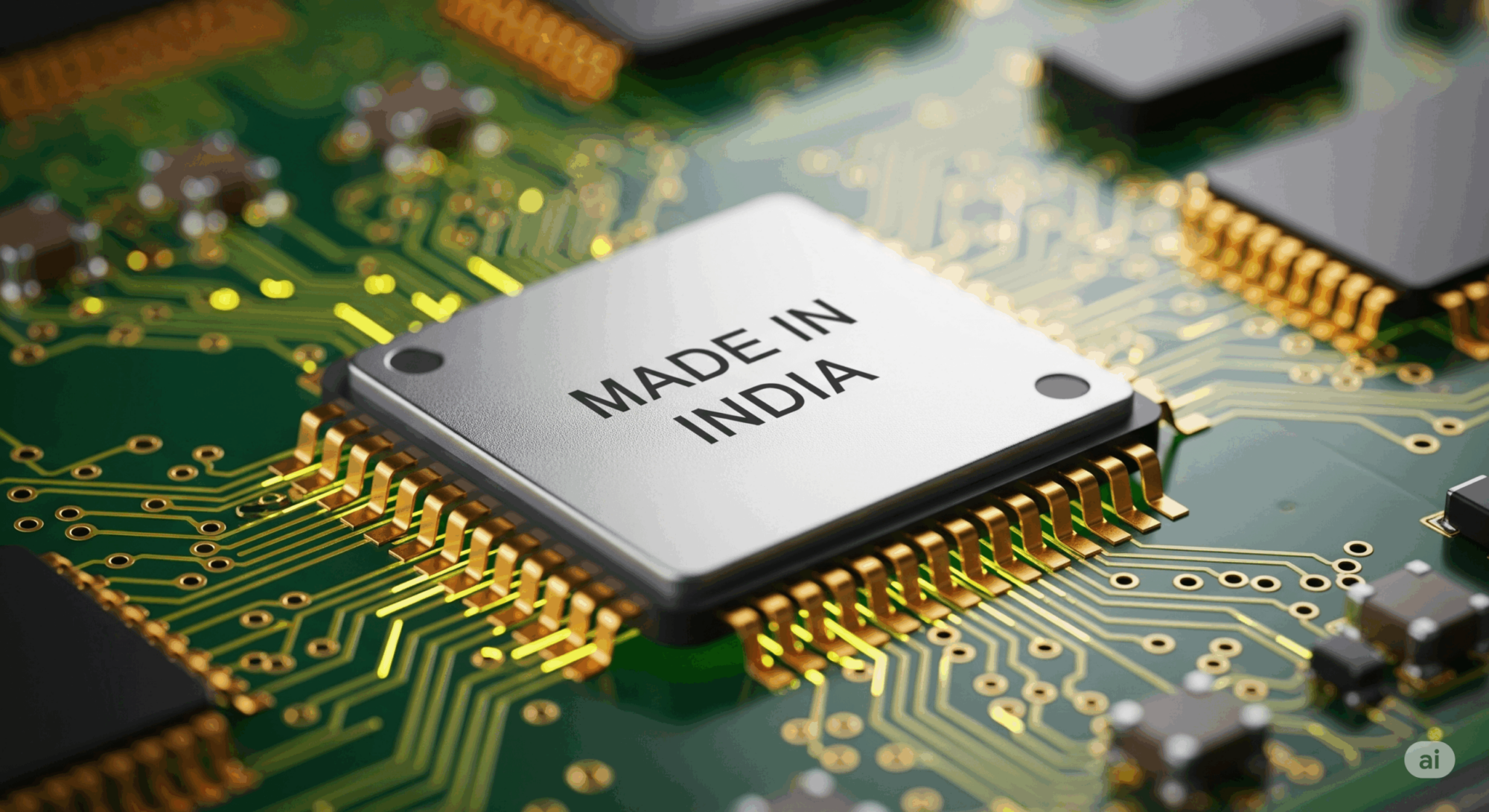
In a move that signals India’s transition from a digital consumer to a global tech architect, the Union Budget 2026–27 has officially launched India Semiconductor Mission (ISM) 2.0. This isn’t just a policy update; it is a declaration of intent to compete directly with the “Silicon Six”—Taiwan, the United States, South Korea, China, Japan, and the Netherlands.
By 2030, India aims to transform its $38 billion (2023) chip market into a $110 billion powerhouse, securing its place as a trusted, high-tech alternative in the global supply chain.
The Geopolitical Leap: Competing with the Giants
For decades, advanced chip manufacturing was a fortress guarded by a few nations. Taiwan alone produces nearly 90% of the world’s most advanced chips. India is now breaking that monopoly with a two-pronged strategy:
- The 2030 Goal: Achieve the capability to design and manufacture 70–75% of all chips required for domestic applications (automotive, 5G, and defense).
- The 2035 Moonshot: Rank among the top four semiconductor nations globally.
- Technological Roadmap: While ISM 1.0 focused on 28nm “mature” nodes, ISM 2.0 is the bridge to 3-nanometre (3nm) by 2032 and 2-nanometre (2nm) nodes by 2035.
Strategic Pillars of ISM 2.0
The new mission, backed by an initial Rs. 1,000 crore provision for FY 2026–27 (part of an overall ₹8,000 crore sectoral outlay), shifts focus toward “Full-Stack” sovereignty.
1. Advanced Manufacturing & Equipment
India is no longer just inviting fabs; it is incentivizing the machines that make the chips. The new Equipment and Materials sub-scheme aims to domesticate the production of high-purity chemicals, gases, and substrates—reducing the capital expenditure (CapEx) that previously hindered Indian startups.
2. Sovereignty in Silicon: DHRUV64
India is tackling its 20% global microprocessor consumption by building its own. The launch of DHRUV64, a fully indigenous 64-bit microprocessor, joins the ranks of SHAKTI and AJIT. These chips, built on the open-source RISC-V architecture, ensure that India’s critical infrastructure—from missiles to 5G towers—remains free from “backdoor” vulnerabilities often found in imported hardware.
3. The Talent “Cleanroom”
While the world faces a talent crunch, India is scaling its “Chips to Startup” program.
- Trained Manpower: 67,000 engineers already trained out of a target of 85,000.
- Industry Partnership: A 10-year pact with Lam Research to train 60,000 professionals in nanofabrication.
- Academic Integration: 122 indigenous designs already taped out by students across 397 universities.
Economic Outlook: The $110 Billion Market
The momentum from ISM 1.0 has already locked in ₹1.60 lakh crore in investments across six states, including the massive Tata-PSMC fab in Dholera and Micron’s facility in Gujarat.
| Indicator | 2023 (Actual) | 2026-27 (Projected) | 2030 (Target) |
| Market Size | $38 Billion | $65 Billion | $110 Billion |
| Self-Sufficiency | < 9% | 17% | 75% (by 2029) |
| Fabless Startups | 0 | 24 | 50+ |
| Tech Nodes | Import Only | 180nm – 28nm | 3nm Pilot (by 2032) |
Conclusion: The “Silicon Shield”
As the world moves toward “friend-shoring,” India is positioning itself not just as a backup to Taiwan, but as a primary architect of the next digital era. ISM 2.0 is the final brick in India’s “Silicon Shield”, ensuring that the future of AI, space exploration, and green energy is written in Indian IP.