

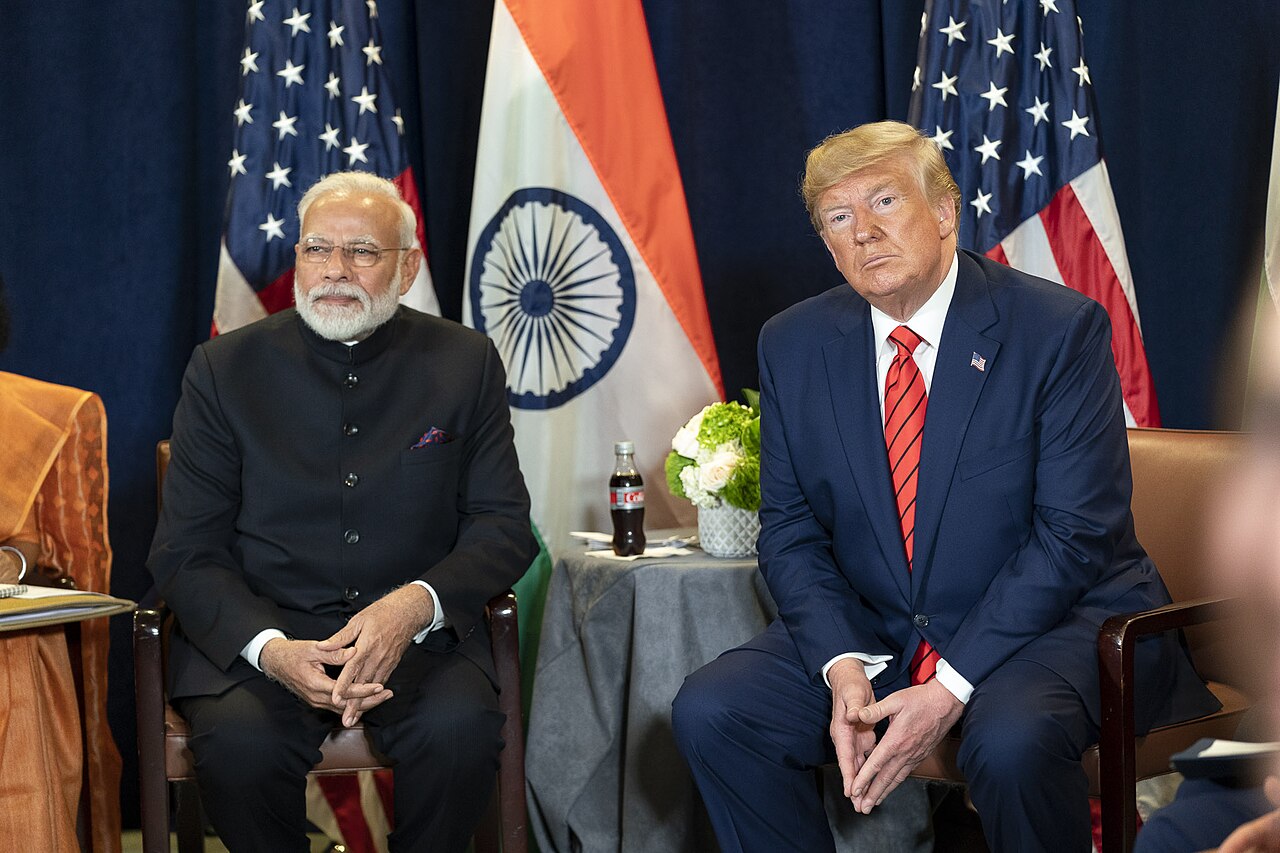
In a landmark move to reshape global energy trade, President Donald Trump signed an executive order on Friday to lift the additional 25% tariff on Indian goods. The decision follows New Delhi’s formal commitment to cease all direct and indirect imports of Russian oil, effectively aligning India with Washington’s strategy to squeeze Moscow’s primary revenue stream.
A New Era of Energy and Defense Cooperation
The tariff removal, effective at 12:01 AM ET on Saturday, is the first major step in implementing a comprehensive trade deal brokered between President Trump and Prime Minister Narendra Modi. Under the new framework, India has pledged to purchase $500 billion in U.S. energy products, aircraft, tech, and coking coal over the next five years.
Furthermore, the two nations have established a 10-year defense cooperation framework, signaling a long-term strategic pivot away from traditional Russian military reliance.
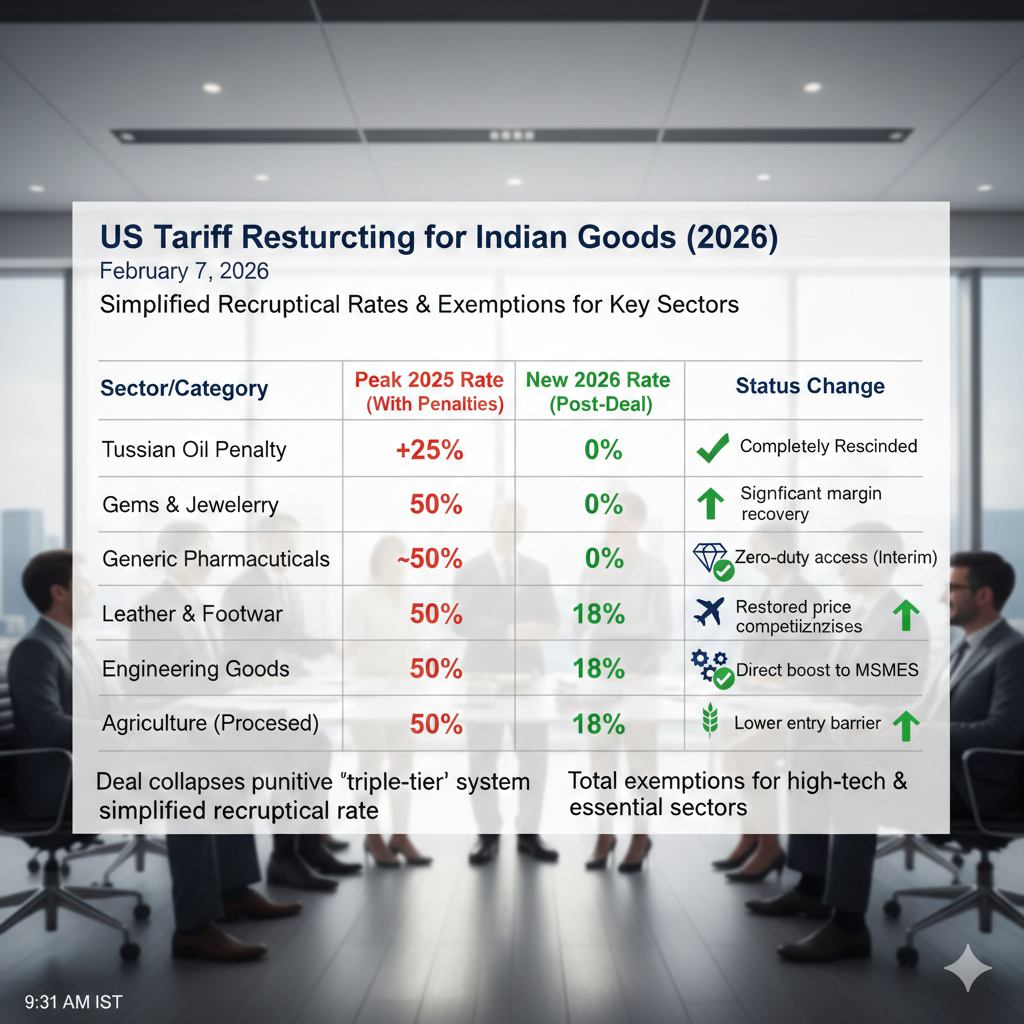
US Tariff Restructuring for Indian Goods (2026)
The deal essentially collapses a punitive “triple-tier” tariff system into a simplified reciprocal rate, while granting total exemptions to high-tech and essential sectors.
Strategic Advantages for Indian Exporters
The agreement also includes a significant reduction in “reciprocal” levies. Washington is set to slash duties on Indian products to 18%, down from a staggering 50% rate seen late last year. According to Wendy Cutler of the Asia Society Policy Institute, this 18% threshold gives Indian exporters a competitive edge over regional neighbors who currently face duties between 19% and 20%.
Restoring the Trump-Modi Alliance
This shift resolves months of diplomatic friction regarding India’s neutrality in the Ukraine conflict. By substituting Russian crude with American energy, India secures its economic interests while restoring the close personal rapport between Trump and Modi. Beyond energy, the deal specifically removes tariffs on aircraft parts, providing a major boost to India’s burgeoning aviation sector.