

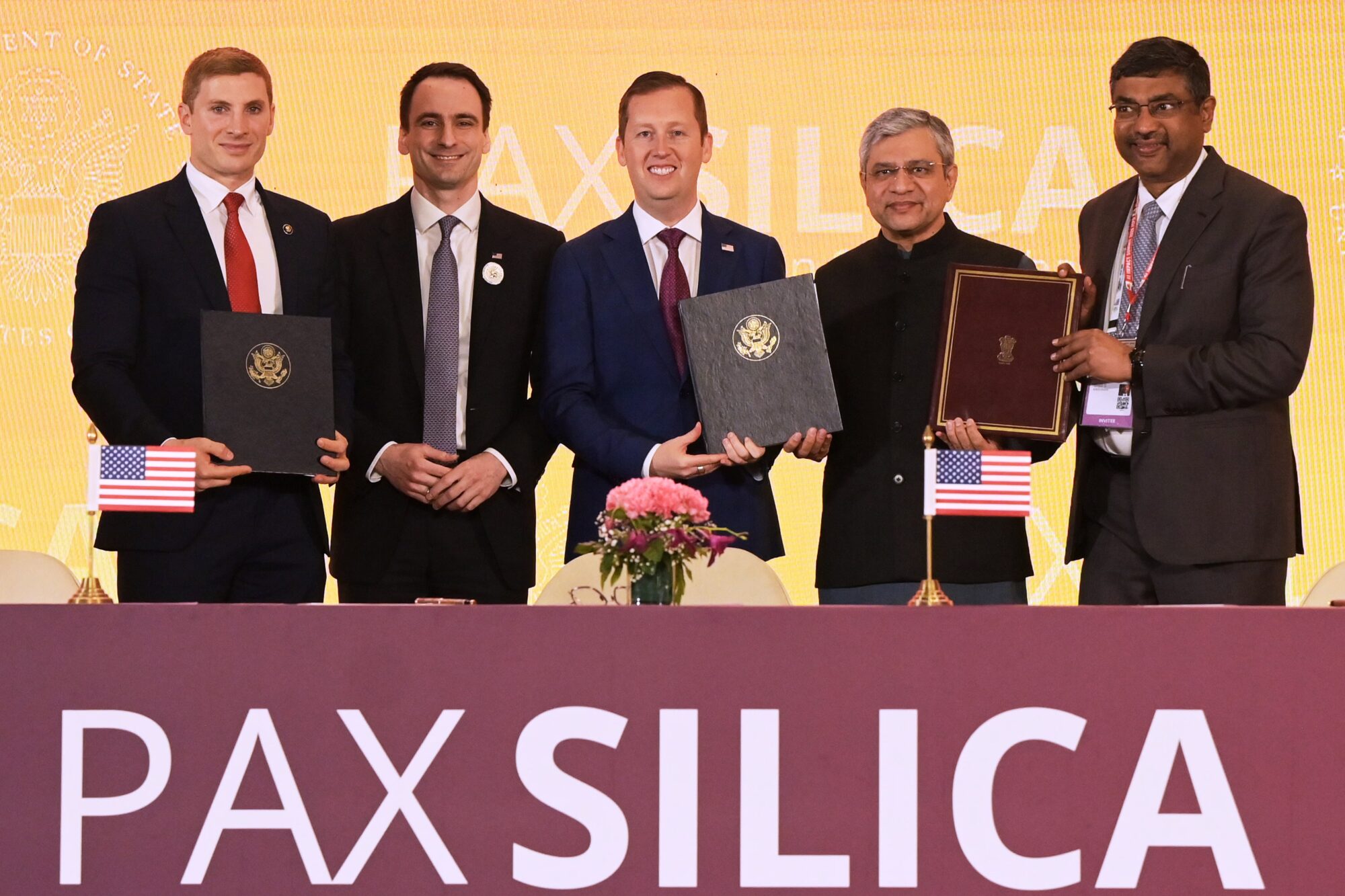
In a move that redraws the global map of technological power, India has officially joined the U.S.-led Pax Silica coalition on the final day of the AI Impact Summit 2026. By signing the declaration at Bharat Mandapam, India has transitioned from a technology consumer to a co-author of the global “silicon stack,” securing its supply chains for semiconductors and critical minerals essential for the next decade of growth.
The summit, organized by the Ministry of Electronics and Information Technology (MeitY) under the IndiaAI Mission, marks the first time a major global AI forum has been hosted in the Global South. While previous international summits focused on the risks of AI, New Delhi has pivoted the conversation toward development, showcasing how artificial intelligence can solve “real world” problems in healthcare, agriculture, and climate resilience.
Why Pax Silica Changes the Game
The Pax Silica initiative is designed to end “weaponized dependency” on single-source supply chains. For India, this means:
- Direct Access: Entry into a trusted network of nations including the US, UK, Japan, and South Korea.
- Talent Export: Positioning India’s 1.8 lakh startups and its 16% share of global AI talent at the center of chip design.
- Economic Surge: Fueling a projected $500–600 billion addition to India’s GDP by 2030.
From Bharat Mandapam to the Global Stage
Union IT Minister Ashwini Vaishnaw emphasized that Indian engineers are already designing advanced 2-nanometer chips, noting that the next generation will reap the benefits of this “compounding growth.” The summit also highlighted India’s Digital Public Infrastructure (DPI)—the same foundation that powered UPI and Aadhaar—as the new global blueprint for inclusive AI.
With over 38,000 GPUs now available under the IndiaAI Mission, domestic startups are no longer dependent on foreign compute markets to train large-scale models. By shifting the focus to “Small AI”—deployable, multilingual systems for low-connectivity environments—India is ensuring that the AI revolution doesn’t just stay in Silicon Valley but reaches the villages of the Global South.